An electrical appliance retailer commissions Google to independently promote its products. In its judgment of 11 March 2026 – I ZR 28/25, the Federal Court of Justice (BGH) had to decide whether the electrical appliance manufacturer was liable for Google’s failure to correctly label energy efficiency classes, and ruled in the affirmative. In doing so, the court clearly highlighted the differences from its ‘Liability for Affiliates’ decision.
What had happened?
The large household appliance manufacturer Hanseatic has a partnership with Google. Hanseatic regularly sends Google certain information about the products it offers. Based on this, Google placed advertisements on its own websites and on websites within the Google Partner Network. This was also the case with two advertisements on the Kleinanzeigen.de portal.
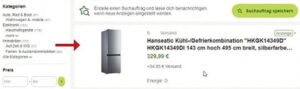
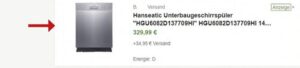
Two advertisements for Hanseatic large household appliances were displayed there. The claimant, a well-known warning letter association, took issue with the labelling of the energy efficiency class. An arrow indicating the range of available energy efficiency classes was missing; it should look something like this, for example.
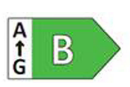
Such labels are mandatory for the relevant appliance categories in accordance with Article 4(c) of Delegated Regulations (EU) 2019/2016 and (EU) 2019/2017, and must also be displayed in online advertising. The advertisement merely displayed the insufficient information “Energy: D”.
Lower courts find no liability
The lower courts initially assumed that a claim for an injunction under Section 8(1) of the Unfair Competition Act (UWG) could not be considered due to the lack of active involvement by Hanseatic. On the basis of the cooperation agreement, Google had freely designed all advertisements in terms of both content and graphics. The cooperation agreement was therefore to be regarded solely as authorising and facilitating a third party’s own business, and not as an extension of Hanseatic’s business operations.
Federal Court of Justice on the extension of business operations
The Federal Court of Justice (BGH) takes a decidedly different view and has referred the matter back to the Court of Appeal. Under the cooperation agreement, Hanseatic provides Google with certain information regarding its own products. Google then independently selects the advertising channels, the scope and the content of the advertisement; for every click on an advertisement, Hanseatic pays Google an agreed fee.
This constitutes an extension of Hanseatic’s business operations, as the company has delegated to Google, at least in part, a task that is fundamentally its own responsibility, namely the promotion of its own product range. Insofar as it is characteristic of the business owner’s liability for results that the owner controls the area of risk, at least in part, these conditions are also met. The placement of the advertisements by Google takes place specifically on behalf of Hanseatic and is based on the information provided.
This constitutes the decisive difference from the case underlying the Federal Court of Justice’s (“BGH”) “Liability for Affiliates” decision (judgment of 26 January 2023 – I ZR 27/22). In this regard, the BGH held:
The present case thus differs from advertising via affiliate links, as was the basis for the “Liability for Affiliates” decision. In that case – unlike in the present dispute – there was no “commissioning” in the sense of outsourcing one’s own activities.
Accordingly, Hanseatic could also be held liable for Google’s inadequate labelling of energy efficiency classes. The advertisements displayed only the unlinked entry “Energy: D’, but did not provide further information as required by Article 4(c) of Delegated Regulations (EU) 2019/2016 and (EU) 2019/2017. Such information could, for example, be provided via links to another website or via a mouse-over function, which was not the case here.
Conclusions for practice
The Federal Court of Justice’s decision can be summarised well in a guiding principle:
A company that commissions third parties to advertise its products and provides the third party with information for this purpose is liable for incorrect labelling in the relevant advertisements.
Anyone wishing to place advertisements on the internet and engaging the services of a third party for this purpose would therefore be well advised to regularly look over their shoulder and check any advertising for its legality. This also applies even if the third party has already been granted the greatest possible structural freedom of design. Should infringements nevertheless occur, the standard sanctions under the Unfair Competition Act (UWG) apply, including injunctions and claims for damages.